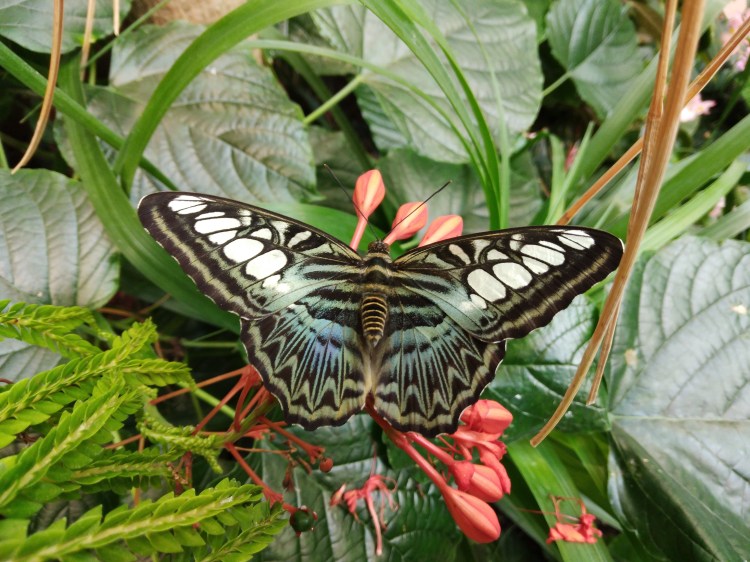
Asian Clipper Butterfly- Hershey Park, PA (photo by the author, Laelia Watt)
Definitions of FRAGILE from the online Cambridge Dictionary:
Easily damaged or broken
Easily destroyed, ended, made to fail
weak, or in poor health, mentally or physically
UK: feeling slightly ill, upset or tired, especially because of having drunk too much alcohol the night before
There were many fragile items in my paternal grandparents’ house. My grandma Lili displayed tea pots and small antique treasures she collected from worldwide flights with my grandfather who was a pilot for PanAm airline. In his retirement, my grandfather Obi was an avid woodworker. He created sturdy items such as desks, bridges, and stools, but also a more delicate exact replica of the house they lived in by the Nissequogue river on Long Island. During the summer, my cousins and I rampaged through the grounds (and through the house) on our adventures in and out of the river and the little streams surrounding the property. We had a lot of freedom, but we also learned to respect the fragile items cherished by our grandparents. All of us have memories of peering into the various doll houses or sitting carefully in the formal living room around the tea sets. I loved looking at Lili’s bonsai trees and terrariums, but did not touch them unless under her guidance.
Fragility does not diminish an item or being’s worth. The collections in my grandparents’ house were highly valued, not only in price, but in sentimental value and memory association. In fact, think of the butterfly. As an insect, which are often considered the lowliest of the lowest beings, it can be squashed, well, like a bug, with hardly any effort. An unintentional swat of the hand, or a heavy rain, or a small hungry bird, can mean the end of the beautiful butterfly’s already brief existence. Despite this fragility, humans love butterflies. We plant flowers for them in our gardens, compose songs and poems about them, and decorate our clothes and housewares with their image. We even construct indoor butterfly gardens as tourist attractions so that we can stand surrounded by butterflies from all around the world and watch them drink from oranges or flit onto our friend’s shirt.
Humans live as if we are invincible and pride ourselves on being the top of the food chain. We are able to tame nature, or at least diminish its harmful effects on us, through our advancements in construction, weapons, hygiene, technologic and scientific inventions, and self-awareness as a species. Yet, people around the world still die in hurricanes, from lions, a rusty nail, hunger, or the smallest bacteria. The pandemic alone is a reminder of how simple matters such as food handling practices and propensity for travel can work against us. We have seen first-hand how fragile our health and education systems are in light of emergencies. We FRAGILE HUMANS have created weapons and bombs so powerful that they could wipe out the entire planet in one fell swoop. We are such fragile beings that we can destroy our species and all others with the push of a button.
Contrary to this, it is the popular tendency to hype ourselves up. We are the greatest (team, company, species, race, nation)! We can accomplish anything! Our boundaries are limitless! Only the weak cry! Pick yourself up by our bootstraps! What doesn’t kill us only makes us stronger! (Sorry, Kelly Clarkson, I love your music, but hate that song.) We despise weakness. Americans especially seem intent on ignoring the fact of death in our funeral practices, conversations, and disinterest in considering how our actions might cause the death of neighbors. We are highly individualistic. “If you die, that’s your problem. I have freedom!”
Acknowledging our fragility, however, only increases empathy for others. It can encourage gratitude and amazement for the beauty of existence. When we stop and admit that we are broken, we stop pretending everything is okay and seek help or change our plan of action. When we realized a bit of rust on a nail can kill us from tetanus, scientists took the time to find a solution. When a person suffers a broken bone, most people don’t ignore the pain and drag around their limp limb touting “Well, it didn’t kill me, so I’m good.” Instead, they immediately seek out a doctor for healing! The same with mental health. There are so many messages and coping mechanisms a human internalizes over a lifetime, but it isn’t until that person admits to feeling damaged or that their actions are causing them to fail in their careers or relationships, that they seek out help. When we feel at peace with our fragile being, we can look at other people with more compassion. Instead of expecting them to be unbreakable, as you expected of yourself, they appear as vulnerable as you. The homeless person is no longer an effigy of moral failing, but a fellow fragile human at the mercy of fragile human systems, easily damaged mental and physical health, or a broken heart.
So, FRAGILE HUMAN, yes, I am calling you that. As a business name, it is partially tongue in cheek, because people want to be strong and empowered, so it seems ironically deflating to insist on fragile. Think back to the examples of the treasures in my grandparents’ home or the stunning butterfly. Think of the fragile balance of our precious ecosystem. Think of all the people that you know, that despite suffering difficult circumstances, or who struggle with various health issues, also have amazing character and bring great value to your life by their very existence. When we recognize our shared fragility, we can honor how far we have journeyed in our lives. We marvel that despite all the ways we could be destroyed, humans are worth being cherished. We look around to fellow humans and respect their boundaries and that they too are worth protecting. If we had no understanding of the fragility of butterflies, we would have no awe for their respective strength. We would not honor their contribution to pollinating plants or care to provide them with optimal environments in which to thrive. If we didn’t understand that their beautiful wings also have tiny fragile scales, we would not respect the fact that they can be damaged just from the oil of our fingers.
In other words, knowing your limits as a fragile being, helps you to have more compassion for yourself and others, because suddenly there is no expectation for you (or them) to be invincible. It removes the hesitation to ask for help, because there is no longer the fake bravado hiding the pain. It increases your feelings of worth of yourself and fellow beings, because cynicism towards weakness is replaced with appreciation that such fragile beings can thrive despite insurmountable odds against them. Even in the broken and crushing moments of life, understanding this fragility increases our respect. Whatever a person’s or creatures’ abilities or contribution to the world, they deserve respect, because life is a beautiful, fragile thing.
 FRAGILE HUMAN